Valladolid: Mexico's Next Expat Destination
Valladolid, Yucatán: colonial charm, cenotes, Tren Maya access, and prices 40–60% below Mérida. Rising expat destination for retirees and investors.
Carlos Mendoza
Lifestyle & Relocation Specialist
A Colonial Gem at the Crossroads of the Yucatán Peninsula
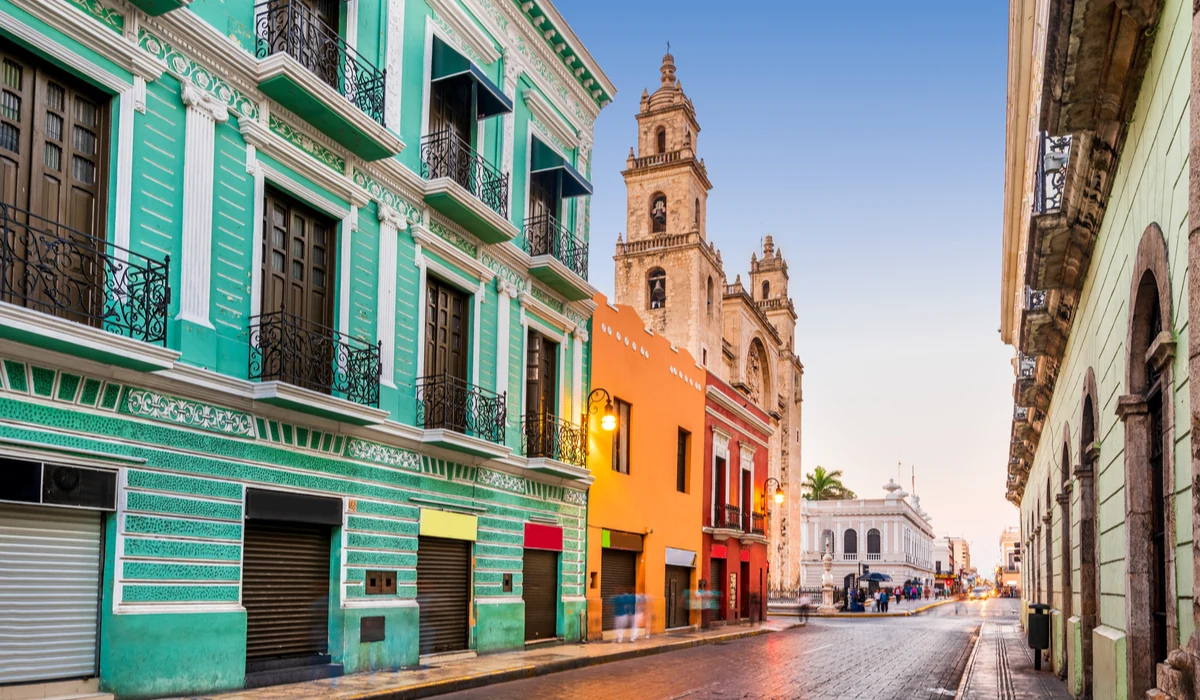
There is a particular kind of city that travelers discover almost by accident — a place they planned to visit for a day and ended up staying for a week. Valladolid, Yucatán is that city. Sitting at the geographic heart of the Yucatán Peninsula, roughly equidistant between Cancún and Mérida, this colonial city of approximately 60,000 residents has quietly built a reputation among expats, retirees, and real estate investors as one of Mexico's most livable and undervalued destinations.
Valladolid earned its Pueblo Mágico designation in 2012 — a Mexican government honor reserved for cities of exceptional cultural and historical integrity. More recently, the arrival of the Tren Maya, a modern rail system connecting cities across the peninsula, has placed Valladolid on a new kind of map: the map of places where smart buyers are looking before prices catch up with the lifestyle on offer.
This guide covers everything you need to know about Valladolid as a place to live, retire, or invest — from the cenotes in your backyard to the property prices that still make Mérida and Playa del Carmen look expensive by comparison.
Why Expats Are Choosing Valladolid
The expat community in Valladolid is small but growing. Unlike Mérida, which has seen a significant influx of North American and European residents over the past decade, Valladolid remains genuinely local. Spanish — and often Yucatec Maya — is the language of daily life. English is rarely spoken outside tourist contexts. For expats who want immersion rather than an enclave, this is a feature, not a bug.
The city offers a quality of life that is difficult to replicate elsewhere at the same price point. The pace is unhurried. The streets are walkable and safe. The food is exceptional — Yucatecan cuisine, shaped by centuries of Maya and Spanish influence, is among the most distinctive regional cooking in all of Mexico. Cochinita pibil slow-roasted in banana leaves, papadzules with pumpkin seed sauce, sopa de lima with crisp tortilla strips: these are not restaurant dishes but everyday staples available at street carts for a few dollars.
Safety is another consistent draw. The state of Yucatán regularly ranks among the safest in Mexico, with a homicide rate of approximately 1.3 per 100,000 residents — a fraction of the national average of 26.6 per 100,000. Local police rarely carry firearms, and the culture of community and mutual accountability that characterizes Yucatecan society extends to Valladolid in full measure.
The Cenotes: Living Next to One of the World's Natural Wonders
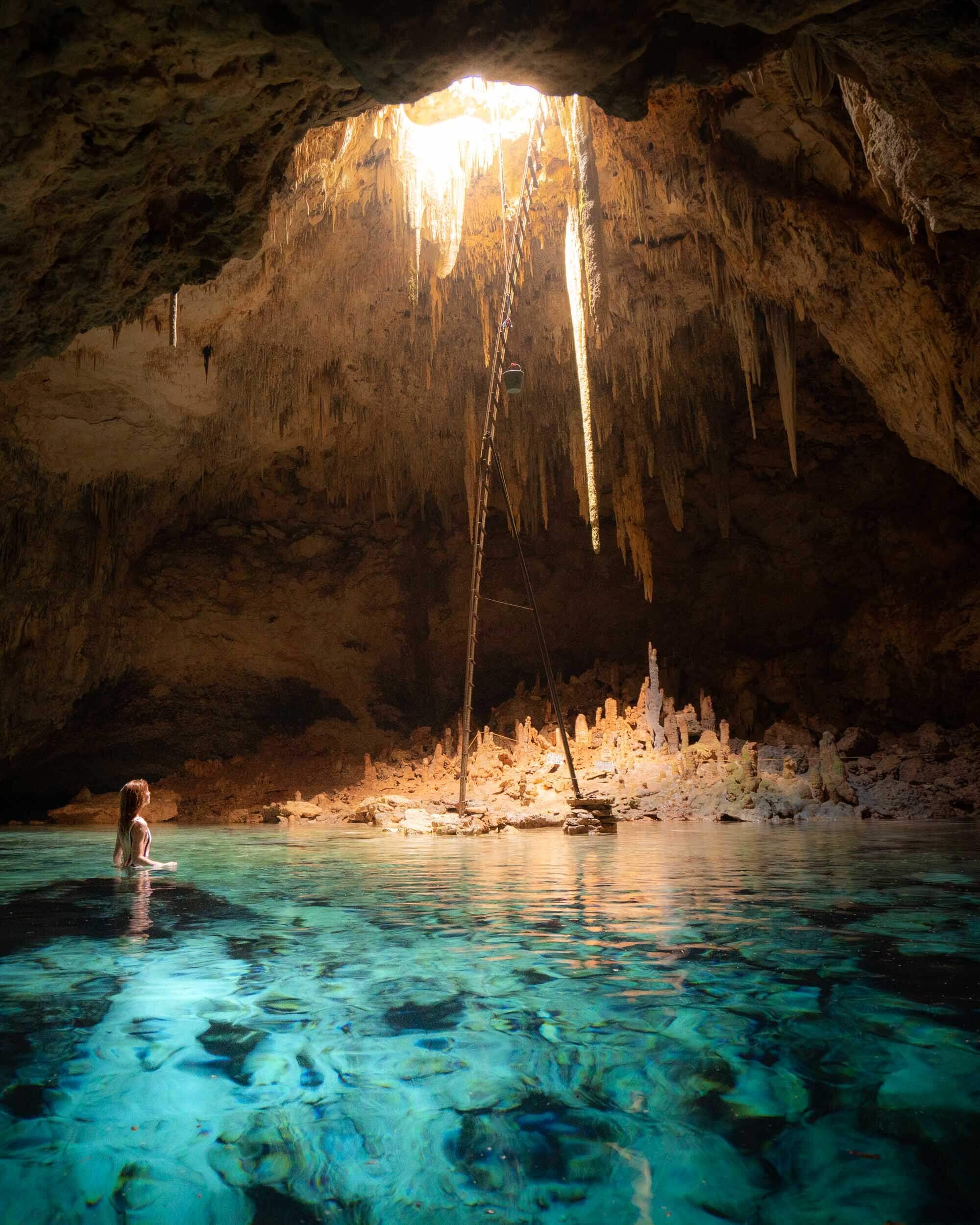
The Yucatán Peninsula sits atop the world's largest underground river system, and Valladolid is at its center. The region surrounding the city contains hundreds of cenotes — natural limestone sinkholes filled with crystalline freshwater, formed over millennia as the jungle floor collapsed into the aquifer below. Swimming in a cenote is an experience unlike any other: the water is cool and impossibly clear, the light filters through openings in the rock ceiling, and the silence is absolute.
Three cenotes are accessible directly from the city. Cenote Zaci sits within walking distance of the main plaza, its open-air pool ringed by ancient stone walls and tropical vegetation. Cenote Samula and Cenote Xkeken, located just outside the city near the village of Dzitnup, offer a more enclosed, cathedral-like experience with stalactites reaching toward the water's surface. For residents, these are not tourist attractions but neighborhood amenities — places to swim on a Sunday morning before the tour buses arrive.
Beyond the city, dozens of additional cenotes are accessible within a 30-minute drive, many on private land or within small Maya communities that welcome visitors. For buyers interested in properties with cenote access, Valladolid's market offers options that would be unthinkable in price anywhere near the Caribbean coast.
Connectivity: The Tren Maya Changes Everything
One of the most significant developments in Valladolid's recent history is its inclusion as a stop on the Tren Maya, Mexico's flagship infrastructure project connecting the major cities and archaeological sites of the Yucatán Peninsula. The train runs from Palenque in Chiapas northeast to Cancún, passing through Campeche, Mérida, Izamal, Valladolid, and Chichén Itzá along the way.
For residents of Valladolid, the practical implications are substantial. Cancún International Airport — the gateway for most North American and European visitors — is now accessible by train in approximately 90 minutes. Mérida, the peninsula's largest city and commercial hub, is reachable in a similar timeframe. Day trips to Chichén Itzá, one of the New Seven Wonders of the World, take less than 30 minutes by rail.
For real estate investors, the Tren Maya represents a structural shift in the city's accessibility profile. Properties that were once considered remote are now, by any reasonable measure, well-connected. The station on the edge of the city has already begun to attract commercial interest, and the surrounding area is seeing early-stage development activity that experienced buyers will recognize as a familiar pattern.
Real Estate in Valladolid: The Numbers
Valladolid remains one of the most affordable property markets in the Yucatán Peninsula. According to current market data, a typical family home near the city center costs between $150,000 and $250,000 USD — roughly 40 to 60 percent less than comparable properties in Mérida, and a fraction of what equivalent square footage would cost in Playa del Carmen or Tulum. The comparison table below illustrates the gap clearly.
| City | Avg. Home Price (USD) | Avg. Price/m² | Fideicomiso Required? |
|---|---|---|---|
| Valladolid | $80,000–$200,000 | $500–$1,000 | No |
| Mérida | $150,000–$400,000 | $800–$1,800 | No |
| Playa del Carmen | $200,000–$500,000 | $1,500–$3,000 | Yes |
| Tulum | $250,000–$600,000 | $2,000–$4,000 | Yes |
| Cancún | $150,000–$400,000 | $1,200–$2,500 | Yes |
One structural advantage that Valladolid offers foreign buyers deserves particular attention: because the city is located more than 50 kilometers from the coast, properties here do not fall within Mexico's restricted zone. This means that foreign nationals can purchase real estate in Valladolid in their own name, without the need for a fideicomiso (bank trust). The fideicomiso, required for coastal properties, carries annual fees of approximately $1,000 to $2,000 USD and adds administrative complexity to ownership. In Valladolid, that cost and complexity simply does not exist.
Property Types and Price Ranges
The Valladolid market offers a range of entry points that accommodate different buyer profiles. Investment lots on the city's outskirts start at $25,000 to $60,000 USD, making them accessible to buyers looking to build from scratch or hold land for appreciation. Residential lots in established neighborhoods range from $40,000 to $100,000 USD. Modest homes in the colonias — the residential neighborhoods surrounding the historic center — are available from $80,000 to $150,000 USD.
The most sought-after segment is colonial properties in and around the centro histórico. Unrenovated colonial houses, which require significant investment to bring to modern standards, are priced between $100,000 and $250,000 USD. Fully restored colonial homes — with original pasta tile floors, carved wooden doors, interior courtyards, and contemporary kitchens and bathrooms — command $200,000 to $500,000 USD or more. These properties are scarce by definition: genuine pre-1900 colonial architecture is a finite resource, and the supply of restorable inventory diminishes with each passing year.
New condominium developments, a category that barely existed in Valladolid five years ago, are now entering the market at price points between $80,000 and $180,000 USD. These projects cater primarily to buyers seeking a turnkey investment with rental income potential, targeting the growing flow of tourists who prefer boutique accommodation over hotel chains.
Cost of Living: What $2,000 a Month Gets You
For retirees and remote workers, the cost of living in Valladolid is one of its most compelling attributes. A comfortable lifestyle — including a rented two-bedroom home, utilities, food, healthcare, and entertainment — is achievable on a monthly budget of $1,500 to $2,500 USD. The table below provides a realistic breakdown based on current market conditions.
| Expense Category | Monthly Cost (USD) |
|---|---|
| Rent (2BR house near centro) | $375–$475 |
| Electricity | $30 |
| Water | $10 |
| Gas | $18 |
| Internet (fiber) | $18 |
| Mobile phone | $20 |
| Groceries | $200 |
| Dining out | $150 |
| Healthcare (private) | $50 |
| Housekeeper (part-time) | $100 |
| Transportation | $22 |
| Entertainment & leisure | $138 |
| Total | ~$1,131–$1,231 |
These figures reflect a genuinely comfortable lifestyle, not austerity. Private healthcare in Valladolid costs approximately one-third of equivalent care in the United States. Doctor visits at private clinics typically run $20 to $40 USD. Dental work is similarly affordable. The city has three private medical facilities — Centro Médico San Lucas, Clínica San Juan, and the Red Cross clinic — supplemented by the public IMSS hospital for emergency care. For more complex procedures, Mérida and Cancún are both accessible within two hours by road or rail.
Neighborhoods: Where to Live in Valladolid
Valladolid's neighborhoods each have a distinct character, and the right choice depends on what kind of daily life a buyer is seeking. The city does not enforce strict zoning, so most areas are genuinely mixed-use — a quality that gives the city its organic, lived-in feel but requires buyers to visit in person before committing to a location.
El Centro is the obvious choice for buyers who want to be at the center of everything. The grand Catedral de San Gervasio dominates the main plaza, and the surrounding streets are lined with restaurants, markets, cultural venues, and the kind of daily commerce that makes a city feel alive. El Centro is walkable, colorful, and full of energy — and correspondingly noisier and more crowded than the outlying neighborhoods. It is the best choice for buyers who want maximum proximity to Valladolid's cultural life and are willing to accept the trade-offs that come with urban density.
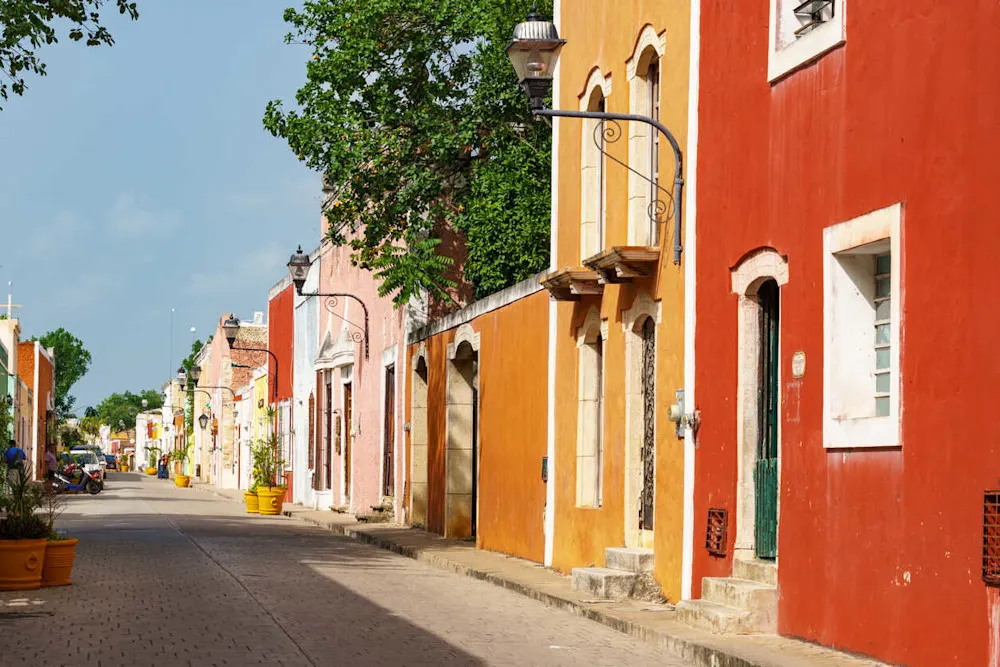
San Juan, a short walk from the main plaza, offers colonial architecture and an artistic character without the intensity of El Centro. The 16th-century Iglesia de San Juan anchors the neighborhood's main square, and the surrounding streets are home to woodcarvers, textile makers, and potters. Casa de los Venados, a converted mansion and folk art museum, is one of the neighborhood's landmarks. San Juan is the choice for buyers who want colonial character and cultural proximity in a slightly quieter setting.
Barrio de la Candelaria is known for its festivals and community life. The Iglesia de la Candelaria, an 18th-century church surrounded by leafy plazas, anchors a neighborhood that comes alive during Semana Santa, Hanal Pixán (the Yucatecan Day of the Dead), and the Candelaria Festival in February. For buyers who want to experience Mexican community life at its most authentic, Candelaria is the neighborhood that delivers it.
For buyers seeking more space and a quieter residential environment, the colonias surrounding the historic center offer modern homes at lower price points, with easy access to supermarkets, schools, and the city's extensive taxi network.
The Investment Case: Early Positioning in a Market on the Move
The investment thesis for Valladolid is straightforward: a city with genuine lifestyle appeal, improving connectivity, and property prices that have not yet caught up with its fundamentals. Average annual price appreciation for well-located properties has been running at 5 to 8 percent, with colonial homes and properties with cenote access appreciating faster. The Tren Maya has increased investor interest from both domestic and international buyers, and the supply of quality colonial inventory is structurally constrained.
The comparison with Mérida a decade ago is instructive. In 2015, Mérida was widely described as an undervalued colonial city with a growing expat community and improving infrastructure. Today, property prices in Mérida's historic center have more than doubled in USD terms, and the city's international profile has grown substantially. Valladolid is not Mérida — it is smaller, more authentically local, and less commercially developed. But the structural conditions that drove Mérida's appreciation are present in Valladolid today: a Pueblo Mágico designation, a growing expat community, improved transport links, and prices that still reflect yesterday's perception rather than tomorrow's reality.
For buyers considering a second home, a retirement property, or a rental investment in the Yucatán Peninsula, Valladolid deserves serious consideration. The window of early-mover advantage is open, but it will not remain open indefinitely.
Practical Considerations for Foreign Buyers
Purchasing property in Valladolid follows the same legal framework as the rest of Mexico, with the significant advantage of no fideicomiso requirement. The transaction is completed through a notario público — a government-licensed notary who verifies title, calculates taxes, and registers the transfer. Buyers should budget for notary fees of 4 to 6 percent of the property value, an acquisition tax (ISAI) of approximately 2 percent, and a property appraisal costing $100 to $250 USD.
Annual property taxes in Valladolid are remarkably low — typically 0.1 to 0.3 percent of the assessed value, often amounting to a few hundred dollars per year. This compares favorably with property tax rates in the United States and Canada, where annual bills on comparable properties can run to several thousand dollars.
For buyers considering renovation projects, construction costs in Valladolid run approximately $30 to $100 USD per square meter depending on the scope and quality of finishes. Local artisans skilled in traditional building techniques — pasta tile work, carved stone, handmade ironwork — are available and affordable, allowing buyers to restore colonial properties to a standard that would be prohibitively expensive in most other markets.
Is Valladolid Right for You?
Valladolid is not for everyone. It is a city where Spanish is essential, where the pace of daily life is genuinely unhurried, and where the amenities of a major metropolitan area are a two-hour train ride away rather than around the corner. Buyers who need proximity to international schools, large shopping centers, or a well-established English-speaking expat community will find Mérida or Playa del Carmen a better fit.
But for buyers who are looking for something different — a city that feels authentically Mexican, where the colonial architecture is the real thing rather than a reproduction, where cenotes are a ten-minute walk from the main plaza, and where the investment fundamentals still favor the buyer rather than the seller — Valladolid is one of the most compelling options in the Yucatán Peninsula today.
Mexico Luxury Properties works with buyers across the full breadth of the Yucatán Peninsula, from the Caribbean coast to the Gulf shore. If you are considering Valladolid or any other area of the peninsula, our team can provide current market data, connect you with trusted legal professionals, and arrange property viewings on your schedule. Contact us today to begin the conversation.
References:
- [1] International Living. (2025, August 26). Guide to Valladolid, Mexico: Everything You Need to Know. https://internationalliving.com/countries/mexico/valladolid-mexico/
- [2] Casas en Valladolid. (2026, March 23). Property Prices Valladolid Yucatán 2026 | Real Market Data. https://blog.casasenvalladolid.com/en/2026/03/23/property-prices-valladolid-yucatan-2026-market-guide/
- [3] Ruta Tren Maya. (n.d.). Tren Maya: Route, stations, stops, attractions and trains. https://rutatrenmaya.com/