Ejido Land: How to Verify a Property Before You Buy
The single biggest source of real estate fraud in Mexico, explained plainly, with the exact documents to request and the public registries where you can check a property yourself.
María Elena Canul
Senior Investment Advisor
Most articles about ejido land are written to frighten you. This one is written to make you capable of checking. The difference matters, because the risk is real but it is also entirely avoidable with three documents and about a week of patience.
Here is the short version. Ejido land is communally held agricultural land. It cannot be sold to you, or to any private buyer, until it has gone through a specific legal process that converts it into private property. People do sell it anyway, usually to foreigners who do not know the difference, and the buyer ends up with a piece of paper that has no legal weight. The money is generally gone.
What ejido land actually is
After the Mexican Revolution, large tracts of land were redistributed to farming communities under a collective ownership system. Land held this way was, by constitutional design, inalienable and could not be sold, seized or transferred.
That changed in 1992. A reform to Article 27 of the Constitution, followed by the new Agrarian Law published in February of that year, ended the redistribution programme and created a legal path for an ejidatario to convert a parcel into full private ownership, known as dominio pleno.
The key word is path. The reform did not turn ejido land into private property overnight. It created a procedure, and until a specific parcel has completed that procedure, it remains ejido land and cannot be legally sold to you.
How the conversion actually works
The process runs through several stages, and each one leaves a paper trail you can verify:
- A special ejido assembly must vote on releasing the parcel. The quorum is high, three quarters of members on first call, and approval requires two thirds of those attending.
- The parcel must be formally withdrawn from the ejido regime through the National Agrarian Registry, the RAN.
- The property is then deeded before a notary and registered with the state Public Property Registry.
Only when that last step is complete does the parcel become private property that can be sold, mortgaged, inherited or placed in a fideicomiso. How long the whole process takes varies enormously depending on the ejido, and anyone who quotes you a firm timeline is guessing.
Why this hits foreign buyers hardest
Ejido membership is restricted to Mexican nationals who belong to the community. A foreigner cannot become an ejidatario, cannot hold an agrarian right, and cannot be a party to a transfer of one. So a foreign buyer who purchases ejido land is not buying a weak title. They are buying nothing.
What they usually receive is a cesión de derechos, a transfer of rights document, sometimes accompanied by a certificate from the RAN. The certificate is often genuine. It proves that a particular ejidatario holds agrarian rights over a particular parcel. It does not prove that the parcel can be sold, and it is not a deed.
Where the problem concentrates
Tulum and the Quintana Roo coast have the highest documented incidence. In April 2025, Bloomberg reported on fraud in the Tulum property boom involving millions of dollars and two deaths, centred on presales of roughly two hundred thousand dollars each on land that turned out to be empty lots. A Mexican legal association reported in October 2024 that property fraud affects roughly seven of every ten cases they see in Tulum. The federal government publicly acknowledged the problem in December 2024.
This is one reason we are conservative about which Tulum projects we list, and it is worth asking any agent, including us, how they verify what they put in front of you.
The verification checklist
You can do most of this yourself, and your notary and lawyer will do the rest. None of it is exotic.
1. Ask for the escritura pública, registered
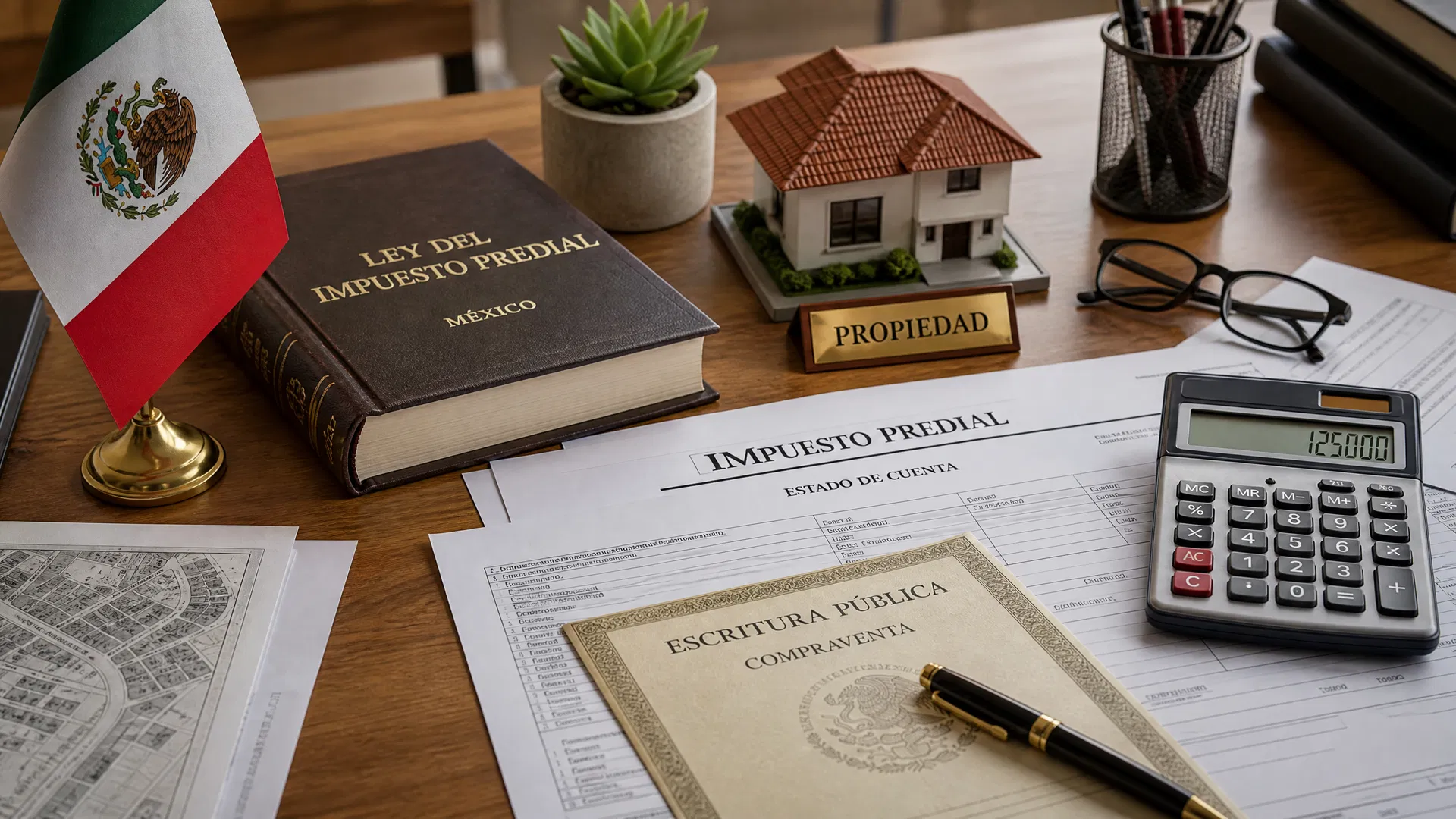
The only document that proves transferable private ownership is a public deed inscribed in the state Public Property Registry. Ask to see it, and specifically ask for the folio real, the registry entry number. A deed that exists but was never registered is a serious warning sign.
If the seller offers anything other than a registered deed, stop. Not slow down. Stop.
2. Request a certificado de libertad de gravamen
This certificate, issued by the state registry, confirms the property carries no mortgages, liens, embargoes or other encumbrances. It typically costs between five hundred and fifteen hundred pesos, takes five to ten business days, and is usually valid for thirty days. Any legitimate seller will expect you to ask for it.
3. Check the RAN yourself
The National Agrarian Registry maintains public consultation tools. The government portal is at gob.mx/ran, with a dedicated module for checking the status of dominio pleno proceedings and an online window for agrarian procedures at ventanillaagraria.gob.mx. If a parcel is still under the agrarian regime, this is where it shows.
4. Use your own notary, not the seller's
In Mexico the notary is a licensed attorney with substantial legal responsibility, not a clerk who stamps documents. Choosing your own, rather than accepting the one the seller brings, costs nothing extra and changes whose interests are being protected.
Warning signs worth memorising
- A price meaningfully below comparable properties in the same area, with no clear reason.
- The words cesión de derechos or título de posesión instead of escritura.
- A parcel certificate from the RAN presented as if it were a deed.
- Pressure to reserve quickly before someone else takes it.
- A seller who cannot produce a folio real, or who explains why it is not needed.
- Any suggestion that the paperwork will be sorted out after you pay.
That last one deserves emphasis. Regularisation of ejido land does happen, and a parcel that is mid process today may be fully private in a few years. But you cannot buy a promise. If the conversion is not finished, the correct move is to wait until it is, not to pay now and hope.
Where this risk is essentially absent
Not every market carries the same exposure. Established condominium developments in Playa del Carmen, Cancún, Puerto Aventuras and Playacar sit on land that was regularised decades ago, with clean registry chains and, in most cases, a bank already holding a construction loan against the property, which means an institution has already run its own title review.
The same is broadly true of the Yucatán coast and of Mérida, where the urban fabric is older and the agrarian question was settled long before the current wave of foreign interest. Mexican buyers, who have been purchasing on that coast for generations, tend to take clean title for granted there for exactly this reason.
Risk concentrates where growth outran the paperwork, which in practice means recently opened land on the fringes of fast growing towns. That is also where the bargains appear to be, which is not a coincidence.
What we do about it
Every property we list is a development with registered title and, in nearly all cases, an institutional lender behind it. Our agents are state-certified in Quintana Roo and we hold NAR membership, but neither credential replaces your own verification, and we would think less of a buyer who skipped it.
If you want to look at inventory where this question is already settled, our Mérida and Yucatán coast listings are a reasonable place to start, along with the established communities in Playa del Carmen.
This article is general information, not legal advice. Retain a Mexican attorney and your own notary for any specific transaction.